


Managing a library involves numerous tasks, from catalouging books to tracking checkouts and returns. Traditional methods can be time-consuming and prone to errors, which is where technology steps in to offer a solution. One such technological advancement is the RFID Library Management System. This system simplifies library operations by automating various processes, improving accuracy and user satisfaction. In this detailed blog, we will explore what an RFID Library Management System is, how it works, and the various solutions it offers to modern libraries.
What is an RFID Library Management System?
An RFID Library Management System uses RFID technology to manage and streamline library operations. RFID technology involves the use of RFID tags, readers, and software to track and manage items. Each library item, such as a book, is equipped with an RFID tag that contains data about the item. RFID readers placed in the library can communicate with these tags to track item movements, automate checkouts and returns, and ensure security. This system significantly improves the process of library management, reduces manual labour, and improves overall user experience.
Basic Working of an RFID Library Management System :
The RFID Library Management System operates through a combination of RFID tags, readers, and software:
RFID Tags : Each library item is tagged with a small RFID chip that stores unique identification data.
RFID Readers : These devices emit radio waves that activate the RFID tags, allowing the tags to transmit their data back to the readers.
RFID Software : The software processes the data collected by the readers, updating the library's database in real-time. For example, if a book is issued, the system updates its status in the database as checked out/ Issued / In circulation . Similarly, when a book is returned, the status is updated to "available."
Various RFID Solutions in Libraries
RFID Self-Service Kiosks :
RFID Self-service kiosks are stations equipped with RFID readers allow patrons to manage their own book checkouts, returns, and renewals. Users can place their books on the kiosk's reader, which automatically scans the RFID tags. Users can then select whether they want to issue, return, or renew the book. Once the tagged book is placed on the reader, the tag is read, and the process is completed. The status of the book is then updated in the library software. For instance, if a book is checked out, the system marks it as "In circulation," and when it's returned, the system updates it to "available." This self-service option reduces wait times for patrons and decreases the workload for library staff. These kiosks are user-friendly and can handle multiple items at once, making the process much quicker.

2CQR’S RFID Self service kiosk
RFID-Enabled Book Drop Boxes :
RFID-enabled book drop boxes are bins that collect returned books and simplify the return process by automatically scanning the returned items. When a patron drops a book into the box, an RFID reader scans the tag, and the system instantly updates the item's status to "returned" in the database. This allows for 24/7 book returns, even when the library is closed, providing greater convenience for patrons.

2CQR’S RFID Book Dropbox
RFID Security Gates :
RFID security gates, installed at the exits of the library, help prevent unauthorized removal of library materials. These gates read the RFID tags on items being carried out from the library and trigger an alarm if an item that has not been properly issued or checked out is moving out. This alerts the staff, who can then look into the situation and resolve it immediately. This system strengthens security by reducing theft and loss of library materials.
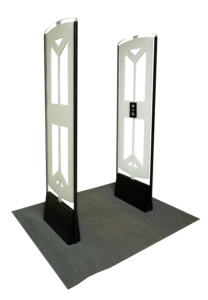
2CQR’S RFID Security Gate
Staff Stations for Issuing/Returning Books :
Staff stations with RFID readers help librarians quickly check out and return books. These stations can scan multiple items at once, making the process much faster than using traditional barcodes. This reduces queues and wait times for patrons. Additionally, the RFID system automatically updates the database with the item's status and borrower information, ensuring accurate transaction records.

2CQR’s RFID Staff station
RFID Stock Control Devices (Handheld Readers) :
RFID Stock control device, i.e ,handheld RFID readers, are essential tools for inventory management in libraries. Librarians can move these portable devices along the shelves to scan the tags of books. The handheld readers match the scanned books with the library's inventory database, quickly identifying any missed or misplaced books. This process ensures accurate inventory audit and helps staff efficiently manage and locate books, keeping the library's collection well-organized and accessible to patrons.
These are some of the most commonly used RFID-based solutions in libraries and they play a crucial role in effectiveness of an RFID library management system.

2CQR’S RFID Stock control device
Conclusion :
An RFID Library Management System offers a comprehensive solution to the challenges of traditional library management. By integrating RFID technology, libraries can automate many routine tasks, improve accuracy, and improve the user experience. From self-service kiosks and drop boxes to security gates and handheld readers, various RFID solutions address different aspects of library operations. Implementing an RFID system not only helps with processes but also ensures a more secure and user-friendly environment.