
Modern libraries are becoming more and more user friendly, thanks to the introduction of self service kiosks. These kiosks allow library members to perform tasks such as borrowing, renewing, and returning books without depending entirely on staff. But many people still wonder: How exactly do returns work at these kiosks, and what about fines or reshelving? Let’s dig into step by step.
A Quick Introduction to Self-Service Kiosks :
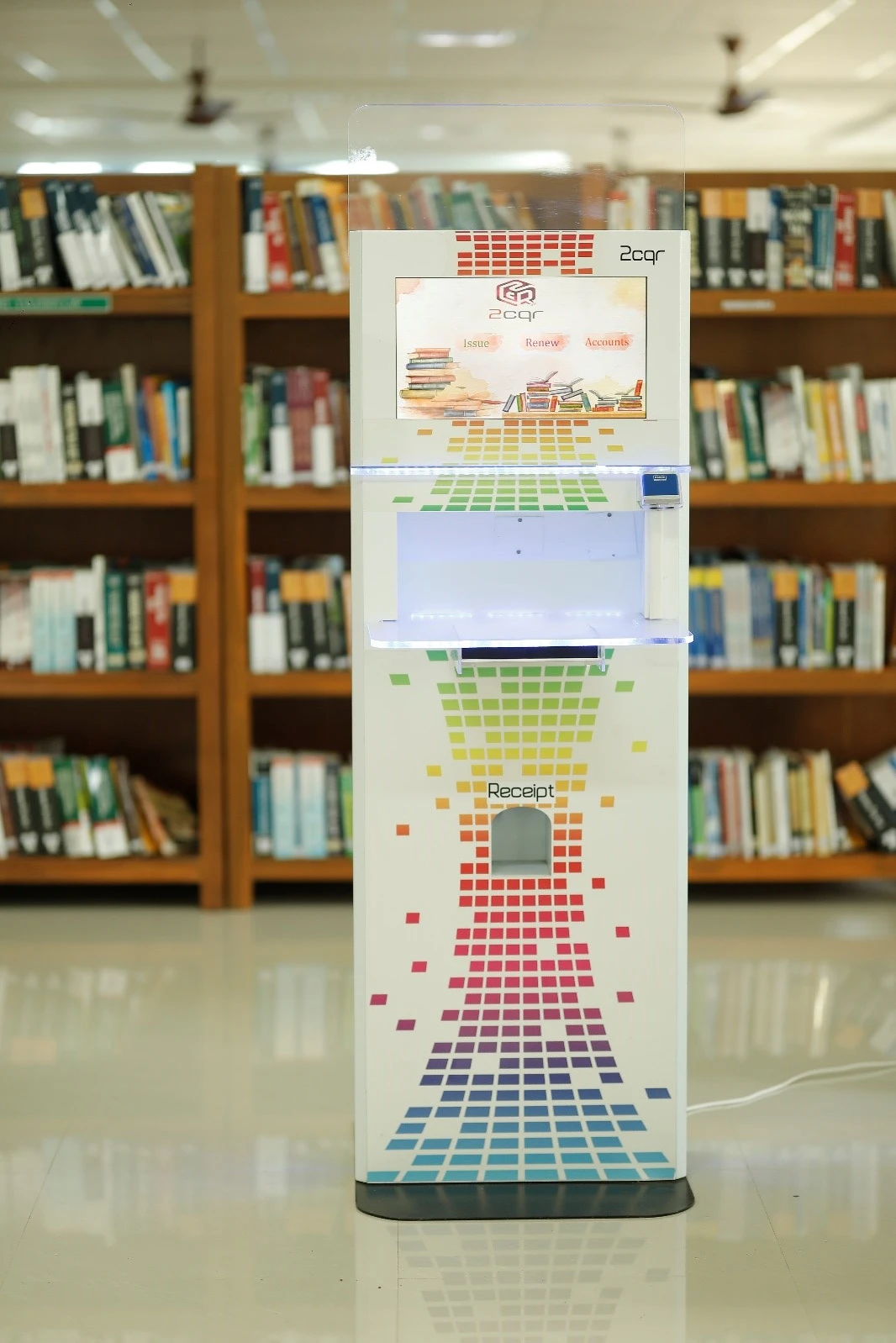
Self service kiosks in libraries are modern, user friendly machines that allow members to handle basic library tasks on their own, without waiting for staff assistance. These kiosks are usually touch screen based and come equipped with technologies like RFID or barcode scanning.
Through these kiosks, members can easily borrow, renew, or return books in just a few minutes. This system saves valuable time for students and faculty and helps libraries manage large crowds more efficiently. Instead of standing in long queues at the circulation counter, users can independently complete their transactions, making the library experience smoother.
Many kiosks also provide features like account details, due date reminders, and fine information, which makes them a complete one-stop solution for everyday library needs.
How Do People Return Books?
When a member wants to return a book:
- Place the Book on the Kiosk:
The user puts the book on the return area of the kiosk. - Automatic Identification:
The kiosk scans the book’s RFID tag or barcode and identifies the title. - Update in the Library System:
Once scanned, the system immediately marks the book as returned in the library’s database. The member no longer has that book under their account. - Return Slip / Confirmation:
Many kiosks also provide a printed or digital slip as proof of return.
How Is the Book Taken and Reshelved?
Once a member returns a book through the kiosk, the process does not end there. The system ensures that the book is safely stored and later placed back on the correct shelf for future use.
Return Bin or Trolley :
After the kiosk scans the book, it usually drops into a secure return bin or a trolley connected to the machine. This ensures that the book is safely collected without risk of damage or loss.
Library Staff Collection :
At regular intervals, library staff empty the return bins. They carefully check the list of books returned through the kiosk to ensure everything matches the records in the system.
Sorting and Reshelving :
The returned books are then sorted according to their call numbers or subject categories. After sorting, staff place them back on the appropriate shelves so that they are available again for borrowing.
Advanced Automated Sorting (in some libraries) :
In modern, technology driven libraries, the kiosks may be linked to automated sorting systems. In such cases, returned books are directed into different bins based on subject, department, or section. This reduces manual work and speeds up the reshelving process significantly.
This structured process ensures that returned books are quickly made available to other readers.
What Happens If There Are Fines?
When a book is returned late, the self service kiosk is smart enough to handle fines automatically. As soon as the book is scanned, the system checks the due date in the library database and calculates whether a fine applies.
Fine Display on Screen :
The kiosk immediately shows the member the fine amount due, along with details such as the number of overdue days and the rules under which the fine was calculated.
Convenient Payment Options :
Many modern kiosks are equipped with payment facilities, allowing members to pay fines instantly through debit/credit cards, UPI, mobile wallets.
Return with or without Payment :
Depending on the library’s policy, the system may either:
Require the fine to be paid immediately before completing the return, or
Record the fine in the member’s account, allowing payment later at the circulation desk
Receipt for Transparency :
Most kiosks also provide a printed or digital receipt showing the fine details, so members have a clear record of the transaction.
Can People Evade Paying the Fine When Returning Books?
The system is designed to prevent such misuse:
Automatic Blocking: If a fine is unpaid, the member’s account may be blocked from borrowing more books until payment is made.
Linked Accounts: Since every book is tied to a user’s library ID, there is no way to return a book anonymously.
Alerts for Staff: If a fine is bypassed, staff are alerted through the library management system for follow-up.
So practically, evading fines is not possible, as the system keeps a complete track of the return and fine status.
Conclusion :
Self-service kiosks have transformed the way libraries manage book returns, making the process faster, easier, and more transparent than ever before. With just a few simple steps, students can return their books without standing in long queues, while the system instantly updates records to show the item as returned.
These kiosks also bring fairness and accountability by automatically calculating fines and ensuring that members clear their dues before continuing to borrow. At the same time, they reduce the workload on library staff, who can then focus more on guiding students and improving library services rather than handling routine transactions.
In the long run, they also encourage a culture of responsibility and respect for library rules among students.