

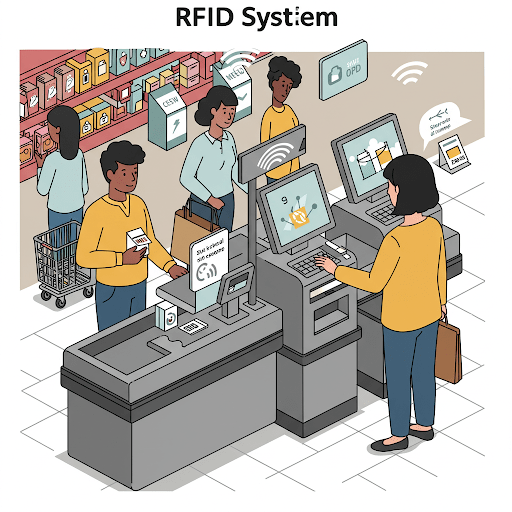
Why RFID Systems Fail: Real-World Mistakes You Can Avoid :
RFID technology is gaining massive popularity across industries—retail, logistics, manufacturing, healthcare, education, and many Steps to implement RFID su. It offers fast and contactless identification, real-time tracking, automation, and work efficiency. But here’s the catch: even a well-selected RFID system can fail to perform if it’s not implemented properly.
As someone who’s involved in RFID-based projects or planning to deploy an RFID system, it’s crucial to be aware of the common pitfalls many businesses make. In this blog, let’s walk through the most frequent mistakes you should avoid while setting up an RFID system.
1. The 'One Tag Fits All' Assumption :
Let’s take an example.
A logistics company applied the same RFID tag on all packages—regardless of whether it was metal crates, cardboard boxes, or chilled vaccine containers.
Guess what happened? Tags near metal or ice didn’t scan properly. The system missed updates, and the tracking became unreliable.
-
Why it happens :
People often pick a single tag type thinking it’ll work for every item. But RFID tags come in varieties—on-metal tags, high-temp tags, tamper-proof tags, etc.
-
Tip :
Always test multiple tag types based on item surface, temperature, and read range before bulk ordering.
2. Improper Reader and Antenna Placement :
You can have the best readers in the world—but if they’re placed incorrectly, the system won’t work effectively.
Common placement issues:
- Placing antennas too close to metal surfaces causing signal reflection.
- Wrong angles reducing read accuracy.
- Overlapping read zones that confuse which tag belongs where.
-
Tip :
Conduct a site survey before installation. Place readers and antennas strategically and test their range in real-world conditions.
3. Ignoring Tag Orientation and Placement :
Even the best RFID tags can go undetected if they’re not placed properly on the item.
-
Mistakes to avoid :
- Tags covered by foil, bubble wrap, or thick plastic.
- Tags placed in awkward angles relative to the reader.
- Mounting tags directly on metal or liquid containers without using proper on-metal tags.
-
Tip :
Always test tag placement on actual items and simulate the entire scan process before rollout.
4. Skipping a Pilot Test :
One of the biggest blunders? Jumping straight to full implementation without a pilot run.
-
What can go wrong :
The system may work in theory but behave differently on-ground.
Tags may not perform as expected in your real-time operations.
Integration or data syncing issues can pop up unexpectedly.
-
Tip :
Do a trial run. Test on a small batch of items or a single zone to identify technical issues early on.
5 . Underestimating Environmental Conditions :
The environment where RFID tags and readers operate has a big role to play in performance. RFID systems can behave very differently depending on the environment they’re placed in. Moisture or rain in outdoor areas can weaken signal strength, while extreme heat or cold—like in factories or cold storage—can damage standard tags over time. In industrial settings, constant exposure to dust, dirt, or chemicals can also interfere with performance. That’s why it’s important to use weatherproof, heat-resistant, or rugged RFID tags that are built for tough conditions. Relying on basic tags in such environments often leads to scanning failures and system breakdowns.
-
Failing to Train the Staff :
Even the most advanced RFID system can fall short if the people using it aren’t properly trained. Staff may place tags incorrectly, mishandle handheld readers, or struggle with basic troubleshooting—leading to scanning errors and unnecessary delays. To avoid this, it’s essential to conduct hands-on training sessions and provide simple SOPs or visual guides. A little effort in training goes a long way in ensuring smooth and consistent usage.
-
Forgetting About Integration :
RFID systems aren’t just about tags and readers—they also need to work seamlessly with your existing software like ERP, WMS, or CRM platforms. When integration is overlooked, you might find that real-time data isn’t syncing properly, manual entry is still needed, or software compatibility becomes a hurdle. To avoid these issues, it’s important to choose middleware or platforms that can easily connect with your current systems. Always test API compatibility during the planning stage to ensure everything works together smoothly.
-
Overlooking Data Management and Tag Collisions :
When multiple tags are present in a reading zone, data collisions can occur. Without proper filtering, duplicate reads and missed tags are common.
-
Problems that arise :
- Inaccurate reports and inventory mismatches.
- Mis reads or no reads at all.
-
Tip :
Use anti-collision algorithms, proper filtering, and zone-based reader configurations to manage multiple tags efficiently.
Ignoring Security and Privacy Concerns :
When RFID is used for sensitive applications like access control, asset tracking, or payments, security becomes critical. If not properly protected, tags can be read by unauthorized scanners, data can be intercepted during transmission, and exposed tag IDs may reveal private information about products or people. To prevent this, it's important to use encrypted RFID tags where needed and set up proper access controls on both your readers and backend systems. Security should never be an afterthought—it should be part of the system from day one.
-
Focusing Only on Hardware Cost, Ignoring Total Investment :
Many businesses look only at the cost of readers and tags, and miss out on:
- Installation charges.
- Software or cloud platform costs.
- Maintenance and replacement
- System upgrades or scalability
-
Tip :
Look at the total cost of ownership (TCO) over time, not just upfront expenses. Factor in scalability too—your system should grow with your business.
Not Partnering with the Right RFID Expert :
DIY RFID setups can go wrong very quickly. It’s important to work with professionals who understand both the technology and your specific industry.
-
Tip :
Always choose an experienced RFID solutions provider who can guide you from design to deployment and beyond.
Wrapping Up: Think Ahead, Test Thoroughly, and Go Slow :
RFID technology is fantastic—but only when implemented thoughtfully. Here’s what we always recommend :
- Test in real-world conditions.
- Don’t skip the planning phase.
- Choose the right partners.
- Train your people.
- Don’t go live all at once—phase it out.
By avoiding these mistakes, you save money, time, and a whole lot of headaches. And your RFID system will actually deliver the magic it promises.