


What are Flap Barriers?
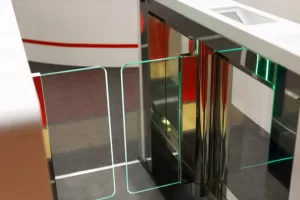
Flap barriers are automated access control systems commonly seen in places where entry and exit need to be controlled. They have flaps made of glass, acrylic, or other materials that open and close to allow or restrict movement. These barriers are often paired with biometric scanners, RFID readers, or access cards to ensure only authorized individuals can pass through.
How Do Flap Barriers Work?
Flap barriers operate using sensors and motors. When an authorized person presents their ID card, scans their fingerprint, or taps their RFID tag, the flaps automatically open to allow passage. If someone attempts to pass without authorization, the flaps remain closed, ensuring security. Sensors detect movement to prevent accidental closing while someone is passing through.
Where Can Flap Barriers Be Used?
Flap barriers are highly versatile and can be installed in various locations, such as:
-
Metro Stations :
To manage passenger flow and ensure only ticketed travellers enter and exit the station.
-
Office Buildings :
For employee access control and visitor management.
-
Libraries :
To regulate entry for students and staff.
-
Airports :
For secure entry into restricted areas.
-
Shopping Malls and Theatres :
For controlled access to restricted zones.
-
Gyms and Clubs :
To allow entry to members only.
-
Factories and Warehouses :
For controlling employee movement and ensuring safety in restricted zones
Common Features of Flap Barriers :
-
Anti-tailgating Sensors :
These sensors detect if multiple people attempt to pass through the barrier after one valid entry. This prevents unauthorized access by following closely behind someone who has proper clearance.
-
Emergency Mode :
In case of emergencies like fire alarms or power failures, the flaps automatically open to allow quick and safe evacuation.
-
LED Indicators :
Clear LED lights are installed on the flap barriers to guide users, indicating whether they can proceed or need to wait.
-
CCTV Integration :
Flap barriers can be integrated with CCTV systems, allowing security person to monitor entry and exit points effectively.
Different Types of Flap Barriers :
-
Single Lane Flap Barriers :
These are designed for narrow pathways and are ideal for areas where space is limited
-
Dual Lane Flap Barriers :
Suitable for high-traffic areas where multiple people need to pass through simultaneously, during busy hours.
-
Wide Lane Flap Barriers :
These are designed to accommodate wheelchair users, individuals carrying large luggage, or those who need extra space .
Advantages of Using Flap Barriers :
-
Security :
Flap barriers prevent unauthorized entry, ensuring only approved individuals access specific areas.
-
Flow Management :
These barriers ensure smooth movement by guiding people in an organized manner, reducing over crowding .
-
Customizable Access Control :
They can integrate with RFID systems, biometric scanners, or QR code readers for improved security options.
-
Durable and Reliable :
Modern flap barriers are built with strong materials and equipped with sensors to avoid accidents.
-
User-Friendly Operation :
Automated opening and closing make them convenient for regular users while maintaining security.
In short, flap barriers are an effective solution for managing entry and exit points in places where security and organized movement are important. By integrating advanced access control systems, they provide a reliable way to increase safety.